Chủ Nhật, 15 tháng 10, 2017

Thứ Ba, 3 tháng 10, 2017
A Brief History and Definition of “Luxury”
Nowadays, we have many terms to describe “luxury” such as true luxury, masstige, premium, ultra-premium, opuluxe, casual luxury, accessible luxury, hyperluxury, metaluxury, you name it. Of course I can’t deny that they are such creations of human creativity in an attempt to clarify the concept of luxury. Why are there such attempts? I guess, because nowadays, “luxury” is more and more accessible and omnipresent thanks to many drivers of the economy. Sound good?? Perhaps! However, an essential problem quickly emerges: if everything is luxury, then the term “luxury” no longer has any meaning, accordingly luxury products, luxury brands, and luxury companies do not necessarily exist. For instance, Marc Jacobs sells in his own boutiques neon boots at US$ 28. Can we even call this product “luxury”? Some might say “yes,” some say “not even close.” Actually answering this question might be more complicated than we think. More reference should be needed. In this post, I will discuss the history of the so-called term “luxury” to hopefully help you clear out some of the confusion.
“In the dawn of humanity there was luxury” - Kapferer, Bastien
Luxury might have existed in the beginning of civilization, deeply rooted in the human practice of religion, and thus reflected the nature of human beings. I take an example of the Ancient Egypt. But keep in mind that the Ancient Egyptians were not the only people on Earth who practiced “luxury” long long time ago (You can look further into other empires such as the Ancient Greece, the Ancient China, etc). The notion of luxury started with the very early awareness of mortality. That people would somehow die resulted in the action of burying the dead. It differed human from animals because animals wouldn’t be concerned so much of the death, and even further, “the life after death” or “eternity”.
Ancient Egyptians believed that the preservation of physical forms or symbolic objects would guarantee the dead the eternal soul. This explained why dead bodies of the most important people in the Ancient Egypt were buried with their most refined, precious and luxurious jewelries or symbols of their power such as weapons, horses and ships. Sometimes, loved ones, food and other personal objects were also considered the sacred sacrifice for the dead to become the eternal. Notably in this period, perfume or sacred water was invented, but only reserved for the Gods, the Pharaoh, the high priest and the royalties. In this period, “luxury” meant royal, sacred and everlasting therefore was forbidden to the most part of the society.

(A treasure-trove of ancient jewels from the tomb at Nimrud)
Until the end of 18th century and beginning of 19th century, there were many notable movements that changed the way people thought and used “luxury.” First, the liberalism, created by renowned philosopher Adam Smith, raised the argument that “luxury trade was the driver of economic growth and a means to creating wealth for all." This movement was later developed and supported by other philosophers of the time, including David Hume. Second, the general democratization, towards the end of the 18th century, gradually made luxury accessible to most people, but in a very slow rate. Third, following the Industrial Revolution which brought about a considerable rise in living standards, more and more people with huge money, even with little or no relation to the royal family, could afford luxuries. The final but also very important note in this period was the beginning of the female emancipation. Women were aware of their rights and some of them were fighting very hard and became independent of men. Some of the most highly regarded and influential female designers at the time couldn’t except fashion icons like Coco Channel, Jeanne Paquin, Madeleine Chéruit… who portrayed strong, liberated but also very feminine and elegant women. (https://fashionista.com/2012/05/25-of-the-most-influential-female-designers-that-changed-fashion-forever)

Victorian Era (1837 – 1901)
Despite many movements between 18th and 19th century, the world of luxury has still been virtually totally isolated from the rest of the economy. The pleasures and delights only preserved for a very small elite group. Practically the entire population was living in a subsistence economy, firmly rooted in their rural environment and poverty. They live everywhere in towns and cities without any access to the culture.
The thing to remember is that luxury is – and always had been – a major sociological issue in any society because it has to do, at one and the same time, with: social stratification, notion of practical utility and waste, and decisions relating to the distribution of wealth. Therefore, in this period, “luxury” meant high-class, successful or wealthy and sophisticated.
Not until the 20th century, had the democratization and globalization really shaken the world of “luxury”. With the increase of spending power and the globalization which brings the goods all around the world, “luxury” has to redefine itself to adapt to the new situation. Exclusive trade among small elite groups is against the premise of the democratization which underlines the equality of everyone to have access to luxury as a part of culture.
Moreover, the movement further argues that the social stratification should gradually disappear. However, it is controversial to totally remove the social hierarchies. In reality the worldwide open trade of luxury might even lead to a deeper emphasize on the gap between the rich and the poor. But what’s has been added to luxury is the “encouragement of humanity”, something that is often lacking in the modern society. Human-centered approaches are applied widely to form affective relationships between luxury brand and client, luxury product and client. Thus, the customer’s emotional attachment and recognition of the brand became one of the most precious assets of one luxury brand.
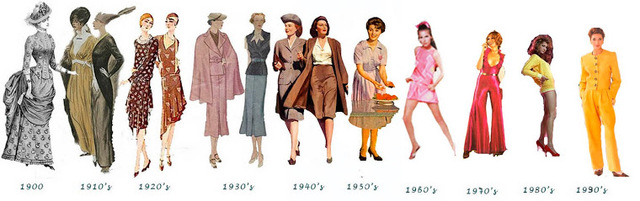
Despite the risk of sacrificing the unique heritage to serve the popular demands, most luxury brands today have chosen to step out of their exclusive world and compete in a worldwide market. The reason is obvious; luxury is not a neutral concept that can stand by itself but is strongly driven by culture and society. If one buys a piece of luxurious Chinese silk, he not only purchases a piece of material but also a part of China heritage. Each luxury product always comes along with a small fragment of its native soil, which makes it valuable and unique. That’s the cultural aspect of luxury. Besides, if people no longer acknowledge a luxury brand and/or a luxury product, they will soon disappear. That’s the social influence on luxury.
Over time, the concept of luxury has evolved in variety of connotations and interpretations. Some might say luxury must be high price, rarity and quality; some might say attention to detail, comfort, and self-indulgence; some might say art, high-fashion, timelessness. In my opinion, the value of a luxury brand lies in how it can preserve its unique heritage over decades and centuries despite the brute impetus of the competition and the ever-changing market.
Ok, back to the question at the beginning “Are Marc Jacobs’ $28 neon boots luxury?” Now you may have the reference to answer to this question, after knowing a brief history of “luxury”. However, this question also states a different problem that wasn’t mentioned in the post: the price. How do you price luxury items? To give the most accurate answer, we should also come to a thorough understanding of three commonly used but mostly misunderstood terms in the industry: fashion, premium as opposed to luxury. The three terms are distinctly different in context and semantics but usually used in slightly the same meanings, causing a lot of confusions among fashion lovers.
It seems a loooong post for the first. See you soon!!
Note on Authors: Jean-Noël Kapferer and Vincent Bastien
Source:
Jean-Noël Kapferer, Vincent Bastien. “The Luxury Strategy: Break the Rules of Marketing to Build Luxury Brands 2nd Edition.” Chap 1. The Luxury Strategy: Break the Rules of Marketing to Build Luxury Brands: Jean-Noël Kapferer, Vincent Bastien: 9780749464912: Amazon.Com: Books, www.amazon.com/Luxury-Strategy-Break-Marketing-Brands/dp/0749464917.
Note on the book: The luxury Strategy – Jean-Noël Kapferer and V Bastien
- considered the “bible” by the luxury industry (Kogan Page 2012)
- written by two world-class experts on complementing professions, each with long experience of luxury
Note on the authors
- Jean-Noël Kapferer is a renowned American expert in brands, recognized worldwide for his work on brand identity, strategic brand management, and, more recently, luxury brand management.
More details http://www.hec.edu/Knowledge/Auteurs/Kapferer-Jean-Noel
- Vincent Bastien was CEO and COO of some of the most famous and profitable luxury brand such as Louis Vuitton, Yves Saint-Laurent, Yves Rocher, Nina Ricci, Sanofi Beauté… Having left the luxury industry, Bastien directed Smart Valley, a startup IT consultancy group, and later was CEO of Quebecor World Europe. More details https://www.entrepreneur.com/author/vincent-bastien
“In the dawn of humanity there was luxury” - Kapferer, Bastien
Luxury might have existed in the beginning of civilization, deeply rooted in the human practice of religion, and thus reflected the nature of human beings. I take an example of the Ancient Egypt. But keep in mind that the Ancient Egyptians were not the only people on Earth who practiced “luxury” long long time ago (You can look further into other empires such as the Ancient Greece, the Ancient China, etc). The notion of luxury started with the very early awareness of mortality. That people would somehow die resulted in the action of burying the dead. It differed human from animals because animals wouldn’t be concerned so much of the death, and even further, “the life after death” or “eternity”.
Ancient Egyptians believed that the preservation of physical forms or symbolic objects would guarantee the dead the eternal soul. This explained why dead bodies of the most important people in the Ancient Egypt were buried with their most refined, precious and luxurious jewelries or symbols of their power such as weapons, horses and ships. Sometimes, loved ones, food and other personal objects were also considered the sacred sacrifice for the dead to become the eternal. Notably in this period, perfume or sacred water was invented, but only reserved for the Gods, the Pharaoh, the high priest and the royalties. In this period, “luxury” meant royal, sacred and everlasting therefore was forbidden to the most part of the society.
(A treasure-trove of ancient jewels from the tomb at Nimrud)
Until the end of 18th century and beginning of 19th century, there were many notable movements that changed the way people thought and used “luxury.” First, the liberalism, created by renowned philosopher Adam Smith, raised the argument that “luxury trade was the driver of economic growth and a means to creating wealth for all." This movement was later developed and supported by other philosophers of the time, including David Hume. Second, the general democratization, towards the end of the 18th century, gradually made luxury accessible to most people, but in a very slow rate. Third, following the Industrial Revolution which brought about a considerable rise in living standards, more and more people with huge money, even with little or no relation to the royal family, could afford luxuries. The final but also very important note in this period was the beginning of the female emancipation. Women were aware of their rights and some of them were fighting very hard and became independent of men. Some of the most highly regarded and influential female designers at the time couldn’t except fashion icons like Coco Channel, Jeanne Paquin, Madeleine Chéruit… who portrayed strong, liberated but also very feminine and elegant women. (https://fashionista.com/2012/05/25-of-the-most-influential-female-designers-that-changed-fashion-forever)
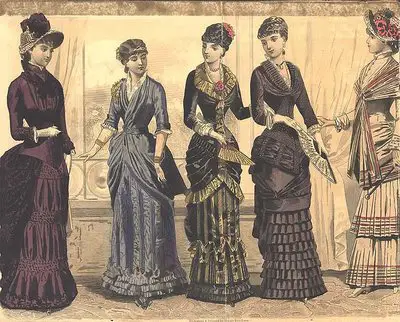
Victorian Era (1837 – 1901)
Despite many movements between 18th and 19th century, the world of luxury has still been virtually totally isolated from the rest of the economy. The pleasures and delights only preserved for a very small elite group. Practically the entire population was living in a subsistence economy, firmly rooted in their rural environment and poverty. They live everywhere in towns and cities without any access to the culture.
The thing to remember is that luxury is – and always had been – a major sociological issue in any society because it has to do, at one and the same time, with: social stratification, notion of practical utility and waste, and decisions relating to the distribution of wealth. Therefore, in this period, “luxury” meant high-class, successful or wealthy and sophisticated.
Not until the 20th century, had the democratization and globalization really shaken the world of “luxury”. With the increase of spending power and the globalization which brings the goods all around the world, “luxury” has to redefine itself to adapt to the new situation. Exclusive trade among small elite groups is against the premise of the democratization which underlines the equality of everyone to have access to luxury as a part of culture.
Moreover, the movement further argues that the social stratification should gradually disappear. However, it is controversial to totally remove the social hierarchies. In reality the worldwide open trade of luxury might even lead to a deeper emphasize on the gap between the rich and the poor. But what’s has been added to luxury is the “encouragement of humanity”, something that is often lacking in the modern society. Human-centered approaches are applied widely to form affective relationships between luxury brand and client, luxury product and client. Thus, the customer’s emotional attachment and recognition of the brand became one of the most precious assets of one luxury brand.
Despite the risk of sacrificing the unique heritage to serve the popular demands, most luxury brands today have chosen to step out of their exclusive world and compete in a worldwide market. The reason is obvious; luxury is not a neutral concept that can stand by itself but is strongly driven by culture and society. If one buys a piece of luxurious Chinese silk, he not only purchases a piece of material but also a part of China heritage. Each luxury product always comes along with a small fragment of its native soil, which makes it valuable and unique. That’s the cultural aspect of luxury. Besides, if people no longer acknowledge a luxury brand and/or a luxury product, they will soon disappear. That’s the social influence on luxury.
Over time, the concept of luxury has evolved in variety of connotations and interpretations. Some might say luxury must be high price, rarity and quality; some might say attention to detail, comfort, and self-indulgence; some might say art, high-fashion, timelessness. In my opinion, the value of a luxury brand lies in how it can preserve its unique heritage over decades and centuries despite the brute impetus of the competition and the ever-changing market.
Ok, back to the question at the beginning “Are Marc Jacobs’ $28 neon boots luxury?” Now you may have the reference to answer to this question, after knowing a brief history of “luxury”. However, this question also states a different problem that wasn’t mentioned in the post: the price. How do you price luxury items? To give the most accurate answer, we should also come to a thorough understanding of three commonly used but mostly misunderstood terms in the industry: fashion, premium as opposed to luxury. The three terms are distinctly different in context and semantics but usually used in slightly the same meanings, causing a lot of confusions among fashion lovers.
It seems a loooong post for the first. See you soon!!
Note on Authors: Jean-Noël Kapferer and Vincent Bastien
Source:
Jean-Noël Kapferer, Vincent Bastien. “The Luxury Strategy: Break the Rules of Marketing to Build Luxury Brands 2nd Edition.” Chap 1. The Luxury Strategy: Break the Rules of Marketing to Build Luxury Brands: Jean-Noël Kapferer, Vincent Bastien: 9780749464912: Amazon.Com: Books, www.amazon.com/Luxury-Strategy-Break-Marketing-Brands/dp/0749464917.
Note on the book: The luxury Strategy – Jean-Noël Kapferer and V Bastien
- considered the “bible” by the luxury industry (Kogan Page 2012)
- written by two world-class experts on complementing professions, each with long experience of luxury
Note on the authors
- Jean-Noël Kapferer is a renowned American expert in brands, recognized worldwide for his work on brand identity, strategic brand management, and, more recently, luxury brand management.
More details http://www.hec.edu/Knowledge/Auteurs/Kapferer-Jean-Noel
- Vincent Bastien was CEO and COO of some of the most famous and profitable luxury brand such as Louis Vuitton, Yves Saint-Laurent, Yves Rocher, Nina Ricci, Sanofi Beauté… Having left the luxury industry, Bastien directed Smart Valley, a startup IT consultancy group, and later was CEO of Quebecor World Europe. More details https://www.entrepreneur.com/author/vincent-bastien
Đăng ký:
Nhận xét (Atom)